
Bilingual SEO for Law Firms: How to Rank in English and Spanish in Border Cities
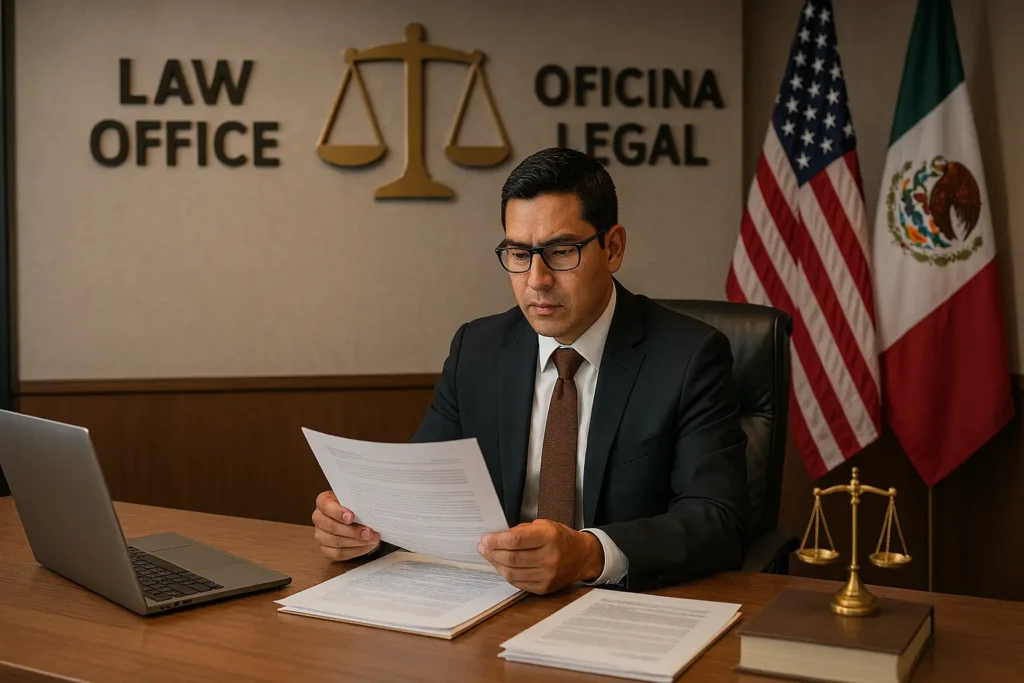
Most law firms in Texas border cities have a website. Most of those websites are in English only. In cities where 85 to 95 percent of the population is Hispanic, that’s not a content gap — it’s a client gap.
Bilingual SEO for law firms means building a search presence that works in both English and Spanish, so potential clients find you regardless of which language they search in. This breakdown covers exactly how to do it — from keyword research to technical setup to the content that converts.
Bilingual SEO for law firms means ranking in both English and Spanish so clients find you in the language they use to search. It covers:
- Spanish keyword research for legal services
- Building Spanish-language practice area pages that rank
- Technical setup — hreflang, URL structure, and canonicals
- Google Business Profile optimization for bilingual visibility
- Local citations and legal directories in English and Spanish
- Content that earns trust from Spanish-speaking clients
Why Bilingual SEO for Law Firms Is Different From Standard SEO
Standard SEO optimizes one set of pages for one language. Bilingual SEO builds two parallel search strategies that share one domain and one brand authority. Every signal you build in English — backlinks, reviews, citations — also strengthens your Spanish pages. That’s the compounding advantage most competitors miss.
Here’s what the opportunity looks like for law firms in Texas border cities:
- Laredo — 95% Hispanic population, most law firm websites English-only
- McAllen — 84% Hispanic population, fewer than 10% of local law firms have optimized Spanish pages
- Brownsville — 93% Hispanic population, Spanish search competition close to zero for most practice areas
- El Paso — 82% Hispanic population, higher competition but still significant Spanish-language gaps
Spanish-speaking clients search differently. They search for “abogado de inmigración en Laredo” not “immigration attorney Laredo.” The intent is the same — the search behavior is different. Ranking for one does not mean ranking for the other.
For a deeper look at how bilingual search works across industries, read our breakdown of Bilingual SEO and AEO for service businesses near the US-Mexico border.
Spanish Keyword Research for Legal Services
The first mistake most law firms make: they translate their English keywords into Spanish and call it research. “Immigration attorney” becomes “abogado de inmigración” and they move on. The problem is that Spanish-speaking searchers don’t always use the most literal translation — they use the terms they grew up hearing.
Here’s how to do it correctly:
- Start with practice area terms — identify the Spanish terms your target clients actually use, not the direct translation
- Add city modifiers — “abogado de divorcio en McAllen” performs differently from “abogado divorcios McAllen”
- Check search volume by city — border city Spanish search volume differs significantly from national Spanish-language volume
- Identify question-based queries — “cuánto cuesta un abogado de inmigración” pulls high-intent traffic
- Research competitor gaps — find which Spanish practice area terms have no optimized local results
Common high-value Spanish legal search terms in border cities:
- abogado de inmigración en [city]
- abogado de divorcio en [city]
- abogado de accidentes en [city]
- abogado de familia en [city]
- abogado laboral en [city]
- consulta gratis abogado [city]
- despacho de abogados en [city]
According to BrightLocal, 76% of people who search for a local service visit or contact that business within 24 hours. For legal services, where clients are often in urgent situations, that window is even shorter. Being the first result in Spanish search is not a marketing advantage — it is a client acquisition advantage.
Building Spanish-Language Practice Area Pages That Rank
A translated page is not a ranked page. Google treats each language version as a separate entity with its own ranking signals. A Spanish page with no Spanish-specific keyword research, no Spanish backlinks, and no hreflang implementation will not rank — regardless of how good the translation is.
Here’s what a rankable Spanish practice area page requires:
- Spanish focus keyword in the title tag — not a translation of the English title, a keyword-researched Spanish title
- Spanish meta description — written for click-through, not just translation
- Spanish URL slug — `/abogado-inmigracion-laredo/` not `/immigration-lawyer-laredo/`
- Spanish H1 and H2 structure — keyword-informed headings, not translated headings
- Hreflang tags — linking EN and ES versions so Google serves the right one to the right user
- Spanish internal links — linking to other Spanish pages within the site
A page translated into Spanish but optimized for English search is like a billboard in Spanish on a road where only English speakers drive. The message is right — the placement is wrong.
For law firms, the highest-priority pages to build in Spanish are practice area pages, location pages, and the contact page. The contact page in Spanish is especially critical — a Spanish-speaking client who reads your content in Spanish but finds an English-only contact form will often not complete it.
Technical Setup — Hreflang, URL Structure, and Canonicals
The technical foundation of bilingual SEO determines whether Google understands your site structure or penalizes it for duplicate content. Three elements matter most:
Hreflang Tags
Hreflang tags tell Google which language version of a page to serve to which user. Without them, Google may serve the wrong version to the wrong audience — or treat both versions as duplicate content and suppress both.
The correct implementation for a US-Mexico border law firm targeting both markets:
- `hreflang=”en-US”` on the English version
- `hreflang=”es-MX”` on the Spanish version
- `hreflang=”x-default”` pointing to the English version
Both pages must reference each other — the EN page must point to the ES page and vice versa. A one-way hreflang implementation does not work.
URL Structure
Use subdirectory structure for bilingual sites — not subdomains, not separate domains. Subdirectory keeps all authority on one domain:
- English: `marketingbyneffy.com/immigration-lawyer-laredo/`
- Spanish: `marketingbyneffy.com/abogado-inmigracion-laredo/`
Separate domains split your domain authority in half and require building two independent backlink profiles. Subdomains have the same problem. Subdirectory is the right call for most law firms.
Canonical Tags
Each page should have a self-referencing canonical tag. The English page’s canonical points to the English page. The Spanish page’s canonical points to the Spanish page. Never have the Spanish page canonical pointing to the English version — that tells Google the Spanish page is a duplicate and it will not rank.
According to Google’s international targeting documentation, correct hreflang implementation combined with proper canonical tags is the most important technical signal for multilingual sites.
Google Business Profile Optimization for Bilingual Visibility
Your Google Business Profile (GBP) is a separate ranking system from your website. A law firm with strong website SEO but a weak GBP will miss the local pack entirely — the three listings that appear above organic results for local searches.
For bilingual visibility, here’s what to optimize on your GBP:
- Business description in both languages — GBP allows a 750-character description; use the first 250 for English, the next 250 for Spanish, include both sets of keywords
- Services listed in both languages — add each practice area as a service in English and again in Spanish
- Posts in both languages — alternate between English and Spanish posts, or post the same content in both languages weekly
- Respond to reviews in the language they were written — a Spanish review that gets an English response signals to Google that you are not fully bilingual
- Q&A section in both languages — seed the Q&A with common questions in Spanish that Spanish-speaking clients actually ask
For law firms in Laredo and McAllen specifically, Spanish GBP optimization is an almost entirely uncontested space. Most law firms in these cities have GBP profiles that are English-only or have minimal Spanish content.
Legal Directories and Citations in English and Spanish
Citations — consistent mentions of your firm’s name, address, and phone number across directories — are a local ranking factor. For bilingual SEO, you need citations in both English-language and Spanish-language directories.
High-priority legal directories for EN citations:
- Avvo
- Lawyers.com
- FindLaw
- Martindale-Hubbell
- Justia
- State Bar of Texas directory
For Spanish-speaking audiences, also list on:
- Abogados.com — the largest Spanish-language legal directory in the US
- Hispanic Chamber of Commerce directories — Laredo, McAllen, El Paso
- TAMACC — Texas Association of Mexican American Chambers of Commerce
- Local Spanish-language newspapers and community directories in border cities
NAP consistency is non-negotiable. Your firm name, address, and phone number must be identical across every listing — in English and in Spanish. “Law Offices of” in one directory and “Law Office of” in another counts as inconsistent.
Content That Earns Trust From Spanish-Speaking Clients
Spanish-speaking clients in border cities are not a monolithic audience. Some are recent immigrants with limited English. Some are second-generation Americans who are fully bilingual. Some grew up in Laredo or McAllen and mix Spanish and English naturally in daily life.
Content that earns trust across this spectrum:
- Write for comprehension, not for translation. Natural Spanish content reads differently from translated English content. A native Spanish speaker can tell the difference immediately.
- Address the specific fears of Spanish-speaking clients. Immigration status, confidentiality, language barriers in court — these are real concerns that generic legal content ignores.
- Use local context. A blog post about family law in Laredo should mention the Webb County courts, not just generic Texas family law. Local specificity signals that you actually serve that community.
- Feature bilingual attorneys prominently. If your attorneys speak Spanish, lead with that. It is a competitive differentiator that most firms bury in an about page.
- Add schema markup to Spanish pages. LegalService and LocalBusiness schema on Spanish pages increases your chances of appearing in Google AI Overviews for Spanish-language legal queries.
According to Search Engine Journal, structured data increases AI snapshot inclusion rates by up to 28%. For Spanish-language legal queries where competition is minimal, this alone can mean the difference between appearing in AI results and not appearing at all.
Want to understand how AI search is changing legal marketing? Read our breakdown of AEO and Bilingual SEO for service businesses.
Common Bilingual SEO Mistakes Law Firms Make
- Using machine translation without review. Google Translate has improved significantly, but machine-translated legal content still reads unnaturally in Spanish. A native speaker reviewing the content before publishing is not optional.
- One GBP for two languages. You only get one GBP per location, but most firms use it exclusively in English. The description, services, and posts should be bilingual.
- No Spanish internal linking. Spanish pages that don’t link to other Spanish pages on the site signal poor site structure to Google.
- Skipping hreflang. Without hreflang, Google may treat your Spanish and English pages as duplicate content and suppress one or both.
- English-only contact forms. A Spanish-speaking client who reads your content in Spanish but faces an English contact form will often abandon the inquiry.
- No Spanish reviews strategy. Asking for reviews only in English means your Spanish GBP content stays thin. Ask Spanish-speaking clients explicitly to leave reviews in Spanish.
Frequently Asked Questions
Does bilingual SEO for law firms require a separate website?
No. Spanish pages on your existing domain with proper hreflang tags is the correct approach. A separate Spanish domain splits your domain authority and requires building two independent backlink profiles — it costs more and performs worse.
How long does it take for Spanish pages to rank?
In most Texas border cities, Spanish-language competition for legal services is minimal. New Spanish pages from established domains often rank within 2 to 4 months — faster than English pages in the same market because there are fewer optimized competitors.
Which practice areas have the most Spanish search volume in border cities?
Immigration law, family law (divorce and custody), personal injury, and criminal defense consistently show the highest Spanish-language search volume in Texas border cities. Immigration law in particular has significant volume in Laredo and McAllen with almost no optimized Spanish competitors.
Do I need a bilingual attorney to do bilingual SEO?
No — but it helps conversion. You can rank in Spanish without bilingual attorneys. The risk is that Spanish-speaking clients who find you through Spanish search expect to communicate in Spanish. Having at least one bilingual staff member to handle initial inquiries is recommended.
What is hreflang and why does it matter for law firms?
Hreflang is an HTML tag that tells Google which language version of a page to serve to which user. Without it, Google may show your English page to Spanish searchers or treat both pages as duplicates. For law firms with bilingual websites, hreflang is not optional — it is the foundation of the entire bilingual strategy.
How do I get Spanish-language reviews on Google?
Ask directly. After a successful case or consultation, send a follow-up message in Spanish to Spanish-speaking clients with a direct link to your Google review page. Include a short sentence explaining that a review in Spanish helps other Spanish-speaking clients find your firm. Most clients are happy to help when asked directly.
Your Next Steps
Start here today:
- Audit your current website — count how many pages have Spanish versions and how many don’t
- Identify your top 3 practice areas by revenue and build Spanish versions of those pages first
- Update your Google Business Profile description with bilingual content
- Check your hreflang implementation — if you have Spanish pages but no hreflang, fix it before adding more content
- List your firm on Avvo, Justia, and Abogados.com if you aren’t already
If you want to move faster and build a complete bilingual SEO strategy for your firm, that’s exactly what we do — see how we help law firms in border cities rank in English and Spanish.
Get a free bilingual SEO audit for your law firm — we’ll show you exactly where you’re losing Spanish-speaking clients and what to fix first.
Ready to rank in English and Spanish?
Get a free SEO audit and see exactly where your site is leaving bilingual traffic on the table.
Get your free audit Book a consultation